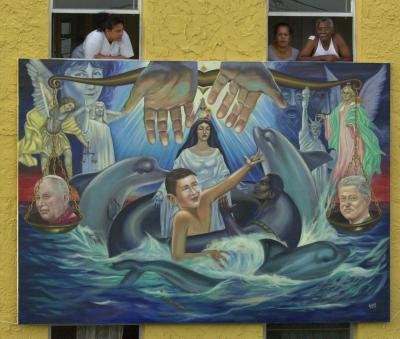
"Nobody is in agreement…It’s that, no one says it and no one takes the risk to say it, to speak the truth. That’s what is happening. In other words, one of the foundations, of what are the regimes in the entire world, in all of history, has been fear and lies. In other words, once you are in fear that's when you don’t take a risk, where you collect yourself and don’t unite…understood? To be in fear is not to offer help to anyone because that signifies risk." -Gorki Águila Carrasco, lead singer, guitarist of the music group Porno Para Ricardo and political prisoner
"Socialist ideology, like so many others, has two main dangers. One stems from confused and incomplete readings of foreign texts, and the other from the arrogance and hidden rage of those who, in order to climb up in the world, pretend to be frantic defenders of the helpless so as to have shoulders on which to stand." --Jose Marti

View Che Guevara's Forgotten Victims on Scribd

SEARCH? GOOGLE IT!

Google
Showing posts with label Cuban healthcare. Show all posts

Monday, January 17, 2011

New Prize in Cold War: Cuban Doctors

New Prize in Cold War: Cuban Doctors

By JOEL MILLMAN

Felix Ramírez slipped into an Internet cafe in the West African nation of The Gambia, scoured the Web for contact information for U.S. diplomats, then phoned the U.S. embassy in Banjul, the capital.

Associated Press

Cuban doctors, shown above treating a patient in Haiti, have been dispatched across the globe

He told the receptionist he was an American tourist who had lost his passport, and asked to speak to the visa section. As he waited to be connected, he practiced his script: "I am a Cuban doctor looking to go to America. When can we meet?"

Dr. Ramírez says he was told to go to a crowded Banjul supermarket and to look for a blond woman in a green dress—an American consular official. They circled one another a few times, then began to talk.

That furtive meeting in September 2008 began a journey for the 37-year-old surgeon that ended in May 2009 in Miami, where he became a legal refugee with a shot at citizenship.

Dr. Ramírez is part of a wave of Cubans who have defected to the U.S. since 2006 under the little-known Cuban Medical Professional Parole immigration program, which allows Cuban doctors and some other health workers who are serving their government overseas to enter the U.S. immediately as refugees. Data released to The Wall Street Journal under the Freedom of Information Act shows that, through Dec. 16, 1,574 CMPP visas have been issued by U.S. consulates in 65 countries.

From Cuba to America

Jason Henry

Cuba has been sending medical 'brigades' to foreign countries since 1973.

Cuba has been sending medical "brigades" to foreign countries since 1973, helping it to win friends abroad, to back "revolutionary" regimes in places like Ethiopia, Angola and Nicaragua, and perhaps most importantly, to earn hard currency. Communist Party newspaper Granma reported in June that Cuba had 37,041 doctors and other health workers in 77 countries. Estimates of what Cuba earns from its medical teams—revenue that Cuba's central bank counts as "exports of services"—vary widely, running to as much as $8 billion a year. Many Cubans complain that the brigades have undermined Cuba's ability to maintain a high standard of health care at home.

The U.S. immigration initiative is reminiscent of the sort of gamesmanship that was common during the Cold War. It has interfered with Cuba's program by triggering defections of Cuban medical personnel all over the globe—an average of one a day since the U.S. countermeasure began in 2006. Cuba generally doesn't include doctors among the 20,000 or more Cubans it authorizes to immigrate to the U.S. each year.

State Department officials say it isn't the intention of the U.S. government to use the immigration program, known as CMPP, to engage in espionage or to disrupt medical missions. Cuban doctors, a State Department spokesman says, "are often denied exit permission by the Cuban government to come to the U.S. when they qualify under other established legal channels." One goal of CMPP is to get Cuba to change that.

A little-known U.S. initiative called Cuban Medical Professional Parole allows Cuban doctors working for their government overseas to get asylum from American embassies around the world. WSJ's Joel Millman reports.

CMPP was the brainchild of Cuba-born diplomat Emilio González, director of the U.S. Citizen & Immigration Services from 2006 to 2008. A former colonel in the U.S. Army, Mr. González is a staunchly anti-Castro exile. He has characterized Cuba's policy of sending doctors and other health workers abroad as "state-sponsored human trafficking." The Cuban doctors, he says, work directly for health authorities in other countries and have no say in their assignments, salaries, hours or work conditions.

[CUBADOCch1]

Cuban doctors themselves regard such overseas assignments differently. Their salaries in Cuba top out at about $25 a month. When serving overseas, they get their Cuban salaries, plus a $50-per-month stipend—both paid to their dependents while they're abroad, according to Cuban doctors interviewed for this story. In addition, they earn overseas salaries—from $150 to $1,000 a month, depending on the mission, the doctors say.

"In Haiti they paid us $300 a month, in gourdes, the Haitian money," says one former overseas doctor who is now back in Cuba. "I converted my salary, and lived fine on $100 per month." With her savings, she says, she bought a television and laptop computer, items she couldn't have gotten in Cuba.

Ramón González, a defector who served on medical missions to Ghana and Gambia, says Cubans' entrepreneurial instincts make for almost unlimited profit opportunities. "You go to the African flea market and buy a bathing suit from the U.S., anything with a Speedo or a Nike label. It's like 45 cents in Africa," he says. "You sell it for $5 in Cuba."

An even more lucrative sideline, he says: private medical practice, including abortions. Dr. González says performing abortions can be a gold mine for Cubans, particularly in the Middle Eastern nations that pay the best salaries.

"The vast majority of Cuban doctors fight to get onto a mission because they can accumulate thousands of dollars," says Dr. Darsi Ferrer Ramírez, director of the antigovernment group Juan Bruno Zayas Center of Health and Human Rights in Havana.

The 41-year-old dissident says the program is rife with corruption. "It's known that to get to the better countries—we're speaking of South Africa, Brazil—there are functionaries who will take money under the table. It costs between $500 and $1,000," he says.

Juan Bautista Palay, chief of physical therapy at Havana's 10 de Octubre Hospital, acknowledges that money is what draws colleagues abroad. "You'd go, too, if you could triple your pay," he says. He denies anyone from his facility has paid bribes to serve abroad.

The U.S. immigration program gives Cuban doctors yet another reason to serve abroad: a way to resettle in the U.S. Ordinary Cubans seeking asylum must reach American shores before applying. Under CMPP, Cuban doctors can do so from U.S. embassies anywhere in the world.

Of the nearly 1,600 defections through Dec. 16, more than 800 health workers have defected from Venezuela alone, and nearly 300 have come from Colombia and Curacao, which don't host Cuban medical brigades but are easily reached from Venezuela. Another 135 have come from four other countries: Bolivia, Guatemala, Namibia and Peru. Others have showed up to defect in such far-flung locales as Qatar, Fiji, Djibouti and Mauritius.

Dr. Ramírez's odyssey began when he was selected for a two-year posting to Gambia. Cuban doctors there are at the pinnacle of the public-health community, teaching in medical colleges and running hospitals. Dr. Ramírez says his aim from the start was to use CMPP to defect. He says he kept his plan secret from his wife and parents, who stayed behind when he left Cuba in 2008.

Dr. Ramírez was assigned to run the surgery unit at the Royal Victoria Teaching Hospital in Banjul. When he arrived in the country to join a 138-person Cuban delegation, he surrendered his passport to security personnel at Cuba's embassy. Cuban doctors also had to turn over other identification documents like driver licenses, Dr. Ramírez says, to hinder any attempt to satisfy U.S. diplomats of their bona fides as defectors. He kept his.

"We had to get cellphones, too, so they always could find us," he says. Dr. Ramírez bought two cheap phones—one to talk with his bosses, the other to plot his escape.

His meeting with the U.S. consular officer at the Banjul supermarket set his plan in motion. Mr. Ramírez says he was able to persuade the officer—he says her name was Wendy Kennedy—that he was a Cuban doctor working in the country. Their next meeting was at the hospital, he says, where Ms. Kennedy conducted a formal interview to prepare his asylum request.

The State Department declined to make Ms. Kennedy available for comment, but confirmed some details of Dr. Ramírez's account, including that Ms. Kennedy worked in Gambia at the time of his asylum application.

Dr. Ramírez had to wait months before learning whether he would be granted asylum. He got the news in May 2009 via cellphone. Ironically, he says, he was at an emergency meeting called by his brigade coordinator to discuss two Cubans who had just abandoned their mission and fled to neighboring Senegal.

"They called us in to warn us not to try to flee, or else our families in Cuba would be punished," he recalls.

Ramirez Family

Dr. Felix Ramírez in The Gambia in 2008.

Getting a U.S. visa was one thing, but getting out of Gambia was another thing altogether. His Cuban superiors had his passport, and trying to get out by air would likely attract the attention of Gambian authorities, who would alert the Cubans. He figured he had to get to Senegal.

There was no one to trust among his fellow expatriates, he says. He felt like a prisoner in the home he shared with four other Cubans. "There's always one who is the informer," he says. He needed permission from a brigade coordinator even to visit an African colleague's home for dinner.

He had befriended a Lebanese merchant who was a patient. The merchant connected him with a smuggler, who agreed to take him to Senegal for $500.

Dr. Ramírez left the night after his asylum request was approved, carrying documents from U.S. consular officials in Banjul. In Senegal, he discovered five comrades from the Gambian mission who, unbeknownst to him, also had been plotting their escape. At the airport, he showed airline officials his U.S. entry documents and was allowed to board a flight to Spain. When he arrived, a U.S. diplomat vouched for him so he could board a flight to the U.S.

It is unclear how disruptive defections like Dr. Ramírez's are to Cuba's medical-mission program. Only a small percentage of Cuban doctors sent overseas have actually defected, making it unlikely the program has put much of a dent in revenues collected by Cuba.

Information about exactly how much Cuba makes from medical brigades is hard to come by. In many cases, Cuba extracts a direct payment either from a host government or an international aid group. Individual Cuban doctors are paid only a portion of what Cuba collects.

Since Hugo Chávez came to power in Venezuela in 1998, Cuba has been bartering doctors for Venezuelan oil. The U.S. Energy Department estimates that Venezuela ships Cuba 90,000 barrels of oil a day—worth more than $2 billion a year at current prices. In addition, Venezuela pays Cuba for medical teams sent to countries that Mr. Chávez considers part of Venezuela's "Bolivarian" sphere. Bolivia, Honduras, Ecuador and Paraguay all use Cuban doctors paid for by Venezuela.

Germany, France and Japan, working through the Pan-American Health Organization, paid $400 per month for each doctor sent to work in Honduras after a hurricane in 2005, according to the Honduran government.

Cuba's Public Health Ministry said in November: "As a principle, we have prioritized donating medical brigades to countries with grave health problems and few resources and hard-to-reach settlements, where local doctors refuse to work." It said that Cuba intends to send more doctors abroad, to nations better prepared to pay for services. "In countries whose economy permits, we will increase the presence of our professionals, with compensation," it said.

Julie Feinsilver, who tracks Cuba's medical diplomacy as a senior fellow of the Council on Hemispheric Affairs in Washington, a think tank, says such arrangements benefit both Cuba and the host countries. "Do you think that it is possible to hire doctors for less than $1,000 a month? The Cuban government does earn money, albeit considerably less than others would for similar services."

By summer's end, Dr. Ramírez and the five other Cubans who defected with him from Gambia were all in Miami. Four of them work as instructors at Dade Medical College. Dr. Ramírez is a surgical assistant at Baptist Health South Florida's hospital in Homestead, Fla.

Dr. Ramírez's parents and wife—and a son born shortly after he left for Africa, whom he has never seen—remain in Cuba, in Camagüey. All of them are eligible for U.S. visas under the CMPP program, but there is virtually no chance they'll get out soon. Dr. Ramírez says his wife lost her job at a hospital because of his defection.

"They're blacklisted for five years, minimum," Dr. Ramírez says. "I'm a traitor to the homeland now."

Write to Joel Millman at joel.millman@wsj.com

Tuesday, January 4, 2011

Cuba HealthCare WSJ

A Cuban Fairy Tale From PBS

What public television didn't tell you about health care in Castro's socialist state.


In his memoir covering four years in Cuba as a correspondent for Spanish Television, Vicente Botín tells about a Havana woman who was frustrated by the doctor shortage in the country. She hung a sheet on her balcony with the words "trade me to Venezuela." When the police arrived she told them: "Look, compañeros, I'm as revolutionary as the next guy, but if you want to see a Cuban doctor, you have to go to Venezuela."

That story was not in the three-part report by Ray Suarez on Cuban health care that aired on PBS's "NewsHour" last week. Nor was the one about the Cuban whose notice of his glaucoma operation arrived in 2005, three years after he died and five years after he had requested it. Nor was there any coverage of the town Mr. Botín writes about close to the city of Holguín, that in 2006 had one doctor serving five clinics treating 600 families. In fact, it was hard to recognize the country that Mr. Suarez claimed to be describing.

The series was taped in Cuba with government "cooperation" so there is no surprise that it went heavy on the party line. Still, there was something disturbing about how Mr. Suarez allowed himself to be used by the police state, dutifully reciting its dubious claims as if he were reporting great advances in medical science.

Castro's military dictatorship marks 52 years in power next week. But the "revolution" is dead. A new generation of angry, young Cubans now vents on Internet blogs and through music, mocking the old man and his ruthless little brother. On Nov. 29, in the city of Santa Clara, hundreds of students launched a spontaneous protest when they were denied access to a televised soccer match they had paid to watch. What began as a demand for refunds soon turned to shouts of "freedom," "down with Fidel" and "down with socialism," according to press reports.

Associated Press

Cuban public health workers fumigate a street in Havana during a campaign against dengue fever.

Dissent is spreading in Cuba like dengue fever because daily life is so onerous. One of the best documented sources on this subject is the Botín narrative ("Los Funerales de Castro," 2009, available in Spanish only), which pulls back the curtain on "the Potemkin village" that foreigners see on official visits to Cuba. Behind the façade is desperate want. Food, water, transportation, access to health care, electricity, soap and toilet paper are all hard to come by. Even housing is in short supply, with multiple families wedged into single-family homes. The government tries to keep the lid on through repression. But in private there are no limits to the derision of the brothers Castro.

Americas Columnist Mary Anastasia O'Grady debunks a health-care fable.

Mr. Suarez's report, by contrast, is like a state propaganda film. In one segment, an American woman named Gail Reed who lives in Cuba tells him that the government's claim of its people's longevity is due to a first-rate system of disease prevention. He then parrots the official line that Cuba's wealth of doctors is the key ingredient. What is more, he says, these unselfish revolutionary "foot soldiers" go on house calls. "It's aggressive preventive medicine," Mr. Suarez explains. "Homes are investigated, water quality checked, electrical plugs checked."

An abundance of doctors? Not in the Cuba Mr. Botín lived in. In 2006 the government claimed there were 65,000 doctors. That number, he says, was "a figure that many professionals considered inflated." When Cubans complained they couldn't get care, he notes that the state upped the number "magically" to 71,000 five months later. Given Fidel's habit of making things up, it's hard to know how many competent doctors the government has trained. But there is no disputing the fact that medics have been sent overseas in large numbers to earn hard currency for the regime. There is also no question that Cubans are paying the price at home.

As to doctors checking on water quality and electricity outlets, the PBS reporter might be surprised to learn that most Cuban homes have no running water or power on a regular basis. This is true even in the capital. In 2006, Mr. Botín says, a government minister admitted that 75.5% of the water pipes in Havana were "unusable" and "recognized that 60% of pumped water was lost before it made it to consumers." To "fix" the problem, the city began providing water in each neighborhood only on certain days. Havana water is also notoriously contaminated. Foreigners drink only the bottled stuff, which Cubans can't afford. In the rest of the country the quality and quantity of the water supply is even less reliable.

Mr. Suarez also reported that, according to Ms. Reed, Cuba is suffering an "embargo of medicine." But there is no embargo on food or medicine. The problem is that the government lacks the money to pay for new medicines that are protected under patent.

Reporters who want access to Cuba know that they have to toe the Castro line. I get that. Mr. Suarez must figure that his American audience does not.

Write to O'Grady@wsj.com


Saturday, December 18, 2010

US embassy cables: US castigates much-vaunted Cuban health system

  • guardian.co.uk,
  • Thursday, 31 January 2008, 19:52

C O N F I D E N T I A L SECTION 01 OF 06 HAVANA 000103
SIPDIS
SIPDIS
DEPT FOR WHA/CCA
EO 12958 DECL: 01/25/2018
TAGS PGOV, PINR, PREL, ECON, AMED, SOCI, AMGT, CU
SUBJECT: CUBAN HEALTHCARE: "AQUI NADA ES FACIL"
(HERE NOTHING IS EASY)
REF: HAVANA 0076
Classified By: COM: Michael E. Parmly: For reasons 1.4 b/d

  1. Sicko
  2. Production year: 2007
  3. Country: USA
  4. Cert (UK): 12A
  5. Runtime: 113 mins
  6. Directors: Michael Moore
  7. More on this film
Summary
  1. Diplomats believe Michael Moore film "Sicko" was banned in Cuba - for showing the country's health system in such glowing light that it would have provoked a popular backlash. Key passages highlighted in yellow.

  2. Read related article

1. (C) SUMMARY: This cable is a follow up to Reftel and provides anecdotal accounts from Cubans about their healthcare, based on USINT FSHP's (Foreign Service Health Practitioner) interactions with them, her unauthorized visits to Cuban hospitals, and her care of USINT American and Cuban personnel. End Summary.

2. (C) The following anecdotes were obtained from Cubans of various walks of life: domestic employees, neighbors in the Havana suburbs, USINT Local Contract National (LCN) employees, service providers such as manicurists, masseuses, hair stylists, chauffeurs, musicians, artists, yoga teachers, tailors, as well as HIV/AIDS and cancer patients, physicians, and foreign medical students.

-- A Cuban woman in her thirties confides, "It's all about who you know. I'm okay because I am healthy and I have 'friends' in the medical field. If I didn't have my connections, and most Cubans do not, it would be horrible." She relates that Cubans are increasingly dissatisfied with their medical care. In addition to the general lack of supplies and medicines, and because so many doctors have been sent abroad, the neighborhood family physicians now care for 300-400 families and are overwhelmed by the workload. (Note: Neighborhood doctors are supposed to provide care for only 120 families. End Note.) In the absence of the physicians, patients go to their municipality's "polyclinic," but long lines before dawn are common, with an all too common 30-second diagnosis of "it's a virus."

-- A 40-year old pregnant Cuban woman had a miscarriage. At the OB-Gyn hospital they used a primitive manual vacuum to aspirate the contents of her womb, without any anesthesia or pain medicine. She was offered no emotional support for her 'loss' and no pain medication or follow up appointments.

-- A 6-year old Cuban boy with osterosarcoma (bone cancer) is admitted to the oncology hospital. Only his parents are permitted to visit, and then only for limited hours. He does not have a television nor any games or toys. The hospital offers no social support services. The parents do not seem informed as to their son's case. When asked by the FSHP what they know about the management of the disease, they shrug their shoulders. According to the FSHP, cancer patients do not receive on-going basic care utilizing testing procedures common in much of the world to monitor cancer care -- such as blood chemistries and tumor markers, sonograms, x-rays, CT and bone scans, MRIs, PET scans, etc. Patients are generally informed of the type of cancer they have, but know little of its staging, tumor size, metastasis, or prognosis. They may be offered surgery followed by chemotherapy and/or radiation but are not given choices to decide an aggressive versus less aggressive approach, nor are they allowed internet access to learn more of their disease.

-- Many young cancer patients reportedly have become infected with Hepatitis C after their surgeries. Contracting Hepatitis C after surgery indicates a lack of proper blood screening prior to administering transfusions. All blood should be screened for Hepatitis B, C, HIV and Syphilis prior to use. Patients have no recourse and are not fully informed of the seriousness of such an inadvertent infection.

-- During chemotherapy and radiation treatments, patients receive little in the way of symptom or side-effects care (i.e., severe nausea, vomiting, low blood counts, fever, diarrhea, radiation burns, mouth sores, peripheral neuropathies,etc.) that is critically important in being able to continue treatments, let alone provide comfort to an already emotionally distraught victim. Cancer patients are not provided with, nor can they find locally, simple medications such as Aspirin, Tylenol, skin lotions, vitamins, etc. Most Cuban patients are not offered Hospice Care or any social support programs for children, adults, or their care providers.

-- HIV positive patients have had the letters 'SIDA' (AIDS)

HAVANA 00000103 002 OF 006

stamped on their national ID cards. Needless to say, in a country where the national ID card must be shown for everything from getting monthly rations to buying a train ticket, the person is stigmatized for life. There is no patient/doctor confidentiality and discrimination is very strong. (Note: According to Pan-American Health Organization (PAHO) officials in Havana, stamping IDcards used to be the case but is no longer the practice in Cuba, something we could not independently corroborate. End Note.)

-- Some newly diagnosed HIV/AIDS patients are held in what has come to be known as "Prision de Pacientes con SIDA de San Jose" (Prison for AIDS patients). There they are started on antiretrovirals AZT, D4T, 3TC. It is unclear to them why they were put in this prison-like facility but believe it is plain discrimination due to their homosexuality. The average period spent at this facility seems to be 18-24 months.

-- AIDS patients are not given prophylaxis medication for the prevention of PCP (Pneumocysti carinii pneumonia), and for lack of newer medicines some patients are re-started on antiretroviral regimens that were stopped due to significant side effects. The Cuban family physicians who care for these patients' primary care needs do not have the authority to treat their HIV/AIDS disease. There is only one facility in Cuba, Instituto Pedro Kouri, located in Havana, where HIV positive patients can receive their specialty care, antiretroviral medications and treatments. According to HIV positive Cubans known to FSHP, one usually waits for months for an appointment, but can often move ahead in line by offering a gift or hard currency. We are told five Cuban convertible pesos (approximately USD 5.40) can get one an x-ray and more can get one a CD4 count. Patients on the island must travel to the capital city for their specialist visits and medication. Due to the lack of island-wide transportation and the cost of travel, many HIV-positive patients may be seen only once per year.

-- While the GOC claims there is a network of organizations that provide social support for HIV/AIDS patients, many of our sources say they have never been to one. Because they are "marked" as HIV positive, many are prevented from pursuing university studies and few can find gainful employment -- many must resort to menial jobs to survive.

-- A physician XXXXXXXXXXXX told the FSHP that he works 14 hours every other day, then has to hitchhike home because he cannot afford to own a car.

-- XXXXXXXXXXXX stated that Cuban authorities have bannedMichael Moore's documentary, "Sicko," as being subversive. Although the film's intent is to discredit the U.S. healthcare system by highlighting the excellence of the Cuban system, he said the regime knows the film is a myth and does not want to risk a popular backlash by showing to Cubans facilities that are clearly not available to the vast majority of them. When the FSHP showed Sicko to a group of XXXXXXXXXXXX, some became so disturbed at the blatant misrepresentation of healthcare in Cuba that they left the room.

-- Even the Cuban ruling elite sometimes goes outside of Cuba for the best medical care. Fidel Castro, in July, 2006 brought in a Spanish doctor during his health crisis. Vice Minister of Health Abelardo Ramirez went to France for gastric cancer surgery. The neurosurgeon who is Chief of CIMEQ Hospital (reportedly one of the best in Cuba) went to England for eye surgery and returns periodically for checkups.

-- According to a local pediatrician, the approximate breakdown of Cuban physicians' salaries are: 1st & 2nd year residences earn 325 pesos monthly (USD 15.00); 3rd year residences earn 355 (USD 16.00); 4th year residences (specialists) earn 400 pesos monthly (USD 18.00). For every four years of medical practice thereafter, a physician receives an additional 20 pesos (USD 0.89 cents) per month.

-- There is reportedly such a shortage of nurses that within the last few years, a high-school graduate is now offered an

HAVANA 00000103 003 OF 006

accelerated training course of just ten-months duration entitled, "Enfermeras Emergentes" (Emergency Nurses). These "quasi" nurses are not trained to start Intravenous lines, interpret lab results or draw blood.

-- Few medical professionals are allowed access to the internet and are rarely allowed to travel to participate in international conferences or continuing education courses. Access to up-to-date medical literature is not available. Some physicians have confided to the FSHP, "All of us want to leave." They are dissatisfied with their salaries and their own medical care. They receive no special privileges - most of them do not even have access to care at the better foreigner hospitals, even if they work there.

-- As described in reftel, the best medical institutions in Cuba are reserved for foreigners with hard currency, members of the ruling elite and high-ranking military personnel. These institutions, with their intended patient clientele in parentheses, include: Clinica Central Cira Garcia (diplomats & tourists), Centro Internacional de Investigaciones Restauracion Neurologica (foreigners & military elite), Centro de Investigaciones Medico Quirurgicas (military & regime elite), Clinica de Kohly (Primer Buro Politico & Generals of the Ministry of Interior), and the top floors of the Hermanos Ameijeiras Hospital (foreigners) and Frank Pais Hospital (foreigners). These institutions are hygienically qualified, and have a wide array of diagnostic equipment with a full complement of laboratories, well-stocked pharmacies, and private patient suites with cable television and bathrooms.

4. (C) Below are first-hand observations from USINT's Foreign Service Health Practitioner's (FSHP) impromptu and unauthorized (by the GOC) visits to major Havana hospitals where average Cubans receive their healthcare, and from conversations with Cubans in many walks of life.

A. Hermanos Ameijeiras Hospital

-- Address: San Lazaro #701 Esquina A Belascoain, Centro Habana, Havana

-- Date of visit: October, 2007

-- Built in 1982, this newly renovated 600 bed, 24 story hospital is depicted in Michael Moore's film "Sicko," where some 60 surgeries are performed daily including heart, kidney, and cornea transplants, mostly to patients who receive free treatment as part of Operation Milagro (mostly from Venezuela, but also from the rest of Latin America). The two top floors (shown in the movie) are the most modern and are reserved for medical tourists and foreign diplomats who pay in hard currency. The hospital has three intensive care units and all medical specialties except Pediatrics and Obstetrics/Gynecology and has no emergency room. The facility has a CT scanner (often said to be out-of-service), MRI and hyperbaric chamber capabilities.

-- Upon entering the building the FSHP was struck by the grand and impressive lobby with a four-story ceiling, polished terrazzo floors and an elegant center reception booth. No one was in the reception booth, which displayed a digital streaming ticker-tape announcing an outdated hospital event; 30 or 40 people were sparsely scattered in the leather-like chairs throughout the lobby. There were no wheel chairs or other obvious signs this was a hospital.

-- She was told the majority of patients came from Venezuela and each received weekly one bar of Palmolive bath soap, Palmolive shampoo, and a tube of Colgate toothpaste. She was also told the Venezuelan patients frequently take these items outside to the front parking lot and sell them to local Cubans. Cuban in-patients receive one tube of Colgate toothpaste and no other toiletries.

-- Due to the high volume of foreigners receiving treatments and surgeries, most Cubans do not have access - the only chance might be a through a family member or connection working there and a gift or 20 CUCS (USD 21.60) to the Hospital Administrator. Cubans are reportedly very resentful

HAVANA 00000103 004 OF 006

that the best hospital in Havana is "off-limits" to them.

B. Ramon Gonzalez Coro Hospital

-- Address: Calle 21 #856 between 4th & 6th Avenues, Vedado Plaza, Havana

-- Date of visit: July, 2006

-- What is today the Obstetrics & Gynecology (OB-Gyn) hospital for Havana, used to be a private clinic prior to the revolution. The hospital has: 300 beds and reserves 12 beds for foreigners; an Intensive Care Unit for women as well as a Newborn Intensive Care Unit (using a very old infant 'Bird' respirator/ventilator - the model used in the U.S. in the 1970s); an Intermediate Newborn Care Unit; one room for babies less than five pounds needing weight gain; a Genetics Department with a specialized laboratory; and five surgical suites.

-- The FSHP visited this hospital with a pregnant USINT American patient. Normally USINT staff is required to go to Cira Garcia Clinic, but because there were possible OB complications the FSHP was able to arrange, through a Cuban medical contact, for the patient to be seen by a highly-recommended obstetrician.

-- This hospital, located in the densely populated residential area of Vedado, had a dilapidated and crumbling exterior. The FSHP was stopped at the entrance by a guard, but upon mentioning the name of the doctor they were to see, were allowed to proceed to the second floor - supposedly the nicest part of the hospital, which is reserved for foreigners; it reminded the FSHP of some of the poorest hospitals she had seen in Africa - unkempt rooms, old wrought-iron beds, flat mattresses with only one sheet, no A/C, no TV, no amenities. At the nursing station there was no nurse, but a metal cabinet with glass doors that had one jar filled with cotton and one half-full 16 ounce bottle of isopropyl alcohol. There were no other supplies nor any indication this was a nurse's station - no stethoscopes, no computers, no medical charts, no papers or pens on the desk - there was a lone dial-type black telephone.

-- After waiting 15 minutes a nurse in a white uniform appeared and told the FSHP and her patient to wait. She wasn't friendly. There was no waiting room, so they found some chairs in the hall. It was very hot and the patient was very anxious and in pain. After 45 minutes and several attempts in a polite manner to move things along, a young female doctor came out smiling and asked for the patient - she asked that her husband remain in the chair, but did allow the FSHP to go with her upon insisting. At the end of a long hallway, the FSHP and the patient were guided into an "exam room." There were no chairs, screens, posters, any medical supplies or equipment; only one old rusting sheet-metal table without any covering, extensions or stirrups. She asked the patient to undress and climb on the table with no intention to drape her. Having worked in third-world countries, the FSHP brought with her a bag of supplies that included paper drapes, which she placed on the table and over the patient. The doctor pulled out of a nearby drawer an old Pinard fetal heart stethoscope made of aluminum (funnel-shaped, like those used at the turn of the Century ) to listen for the baby's heart beat. The FSHP could not believe her eyes -- this was one of the best OB/GYN hospitals in Cuba. When the FSHP offered the doctor a portable fetal Doppler she had brought from the USINT Health Unit (HU), she gladly accepted.

-- Although the doctor appeared to be clinically competent, she was abrupt and rough with the patient. FSHP believes this to be typical of the hierarchical doctor-patient relationship in Cuba. She stated, "She has an infection and needs an antibiotic," and gave the FSHP a written prescription for an antibiotic generally not recommended during pregnancy. Upon returning to the HUthe FSHP did a culture that returned negative for a bacterial infection. Needless to say, the FSHP did not give the prescription to the patient. As a result of this experience, the FSHP concluded that the best care for her unstable female pregnant patients in Havana -- barring a MEDEVAC to the U.S. -- would

HAVANA 00000103 005 OF 006

be by the FSHP in their own home with telephone consults to an obstetrician in the U.S.

-- XXXXXXXXXXXX told the FSHP that XXXXXXXXXXXX foreign medical students are increasingly covering for the gross shortages of physicians in Cuban hospitals.

C. Calixto Garcia Hospital

-- Address: Avenida De Universidad Y 27 De Noviembre, Vedado, Havana

-- Date of visit: November, 2007

-- Built in the late 1800's, this dilapidated 400-bed hospital was the first teaching hospital in Cuba and is only for Cubans. FSHP believes that if Michael Moore really wanted the "same care as local Cubans," this is where he should have gone. The 22-bed emergency room receives all the major trauma and accident victims from Havana City, plus there are large Intensive and Intermediate Care Units. It also has a CT scanner and an MRI, which are reportedly often out of order. The hospital provides specialist care in all medical fields except OB-Gyn and Pediatrics.

-- During the hospital visit, FSHP was struck by the shabbiness of the facility -- no renovations were apparent -- and the lack of everything (medical supplies, privacy, professional care staff). To the FSHP it was reminiscent of a scene from some of the poorest countries in the world.

-- In an open-curtained exam room inside the emergency room, FSHP saw a middle-aged man lying on a gurney in his own soiled clothes with a large bloody bandage wrapped around his head - he was breathing, but was neither moving nor talking - there was no IV, oxygen (in fact no piped-in oxygen at all at this facility) or monitoring equipment. Neither did there seem to be any sense of urgency to his care.

-- The hospital is spread out over several city blocks consisting of many two-story buildings with various specialties: Internal Medicine, Cardiology, General Surgery, Orthopedics, Ophthalmology, and Neurology, etc. Each building is set up in dormitory style, with 44 metal beds in two large open rooms.

-- The laboratory equipment is very rudimentary - a simple CBC (complete blood count) blood test is calculated manually by a laboratory technician looking through a microscope and counting the individual leucocytes, lymphocytes, monocytes, etc.

-- As the FSHP exited a building, XXXXXXXXXXXX drove up in a badly dented 1981 Moskovich that belched exhaust fumes. The private car, which is a luxury in Cuba, was a gift from his deceased father. He was a thin man, appearing disheveled, unshaved, with a cigarette between his lips, wearing a tattered white lab coat without a shirt underneath. He said his salary was 565 pesos (approximately $22) per month.

D. Salvador Allende Hospital

-- Address: Calzada Del Cerro # 1551, Cerro, Havana

-- Date of visit: November, 2007

-- This 400-bed hospital is located in Cerro - a poorer and more densely populated section than the others visited in Havana. It is an old, run-down facility similar in appearance to Calixto Garcia Hospital in that there are several two-story buildings each with a medical specialty.

-- The FSHP was dropped off a few blocks away so the guards wouldn't see the diplomatic plates. When she walked in, the guards smelled of alcohol. In the emergency room there were about 40 mostly poor-looking Afro-Cuban patients waiting to

HAVANA 00000103 006 OF 006

be seen. It appeared to be very orderly, clean, and organized.

-- The rest of the buildings were in shambles . The FSHP did not see any "real" medicine or nursing practiced during her almost one-hour walk through most of the buildings. As she saw patients, she could not help but think that their own home might provide more value-added than remaining in that hospital. Patients had to bring their own light bulbs if they wanted light in their rooms. The switch plates and knobs had been stolen from most of the rooms so one had to connect bare wires to get electricity. There was no A/C and few patients had floor fans. Patients had to bring their own sheets, towels, soap and supplemental foods. Hospital food service consisted of rice, fish, rice, eggs, and potatoes day after day. No fresh fruits, vegetables, or meat were available.

5. (C) Comment: After living in Cuba for two and a half years, treating numerous Cuban employees at USINT, and interacting with many other Cubans, the FSHP believes many are malnourished and psychologically stressed. Hypertension, diabetes and asthma are widespread, but poorly treated. Common prescription and basic over-the-counter medications are unavailable. Given the large number of chronic diseases treated by the FSHP, preventive medicine in Cuba is a by-gone ideal, rather than the standard practice of care. PARMLY


http://www.guardian.co.uk/world/us-embassy-cables-documents/139530

Thursday, January 3, 2008

DESOLATION

Catching a cold in Cuba
Trip to beautiful island offers harsh lessons about shortages of medicine, food and transportation

By SALLY MELCHER JARVIS, Correspondent
Sunday News

Published: Dec 30, 2007 12:08 AM EST

HAVANA, CUBA - It wasn't much of a cold; just the kind that would get better by itself in a week. In the meantime it was a nuisance with a cough and stuffy nose. A little over-the-counter remedy would help.

It was November 2007. We were in Havana, the capital of Cuba, with a humanitarian group organized by the North Museum of Natural History & Science. Our role was to bring medical and school supplies in our suitcases. Americans are allowed in Cuba; they aren't permitted to spend any money there. We prepaid for our trip including every meal and tip.

There were no over-the-counter remedies to be had. I asked the guide what Cubans did if they had a cold. The guide said that a Cuban would go to the doctor — a visit free of charge — who would write a prescription for aspirin. However, there would be no way to fill the prescription.

We visited a pharmacy later in the trip. Behind the counter five well-dressed Cuban women waited to serve, but the shelves were empty. The only items in sight were the monthly ration of sanitary napkins, 10 permitted per Cuban woman per month.

I then understood the value of the over-the-counter medical supplies we had brought to a Catholic charity.

It was like being in a dream where two different things can happen at the same time. We were in a two-tier system: one for the privileged (tourists, for example) and the other for those who lived and worked in socialist Cuba.

Our luxurious state-owned hotel was closed to Cubans, except for those who worked there. A Cuban could not even come in for a meal.

There were two levels of money. One, the CUC, was used by foreign tourists and convertible to other currencies. The other, the peso, was for Cubans, and worth 5 percent of the "better" currency.

There were two levels of stores, one that took pesos and another that took CUC money. The peso stores had very little to sell. The stores for CUC money were marginally better. Even a modest chain store in the United States could outshine the "better" store.

There certainly were no traffic jams. With few privately owned cars and limited public transportation, many people rely on hitchhiking. In one five-mile stretch of a major highway I counted 20 people hoping for rides. In the same five-mile stretch the traffic consisted of one taxi, one bus, one pedestrian, two horse-drawn carts, three motorcycles, seven cars, 11 bicycles and 13 pickup trucks. This included both sides of the four-lane highway. About 15 percent are 1950s-era American cars still using leaded gas.

Coupons are given out each month for food such as coffee and rice. The coupons run out after two weeks, so it is necessary to buy food with the monthly salary. Food at the farmers' market is expensive. So if a person does not use the coffee ration, that coffee is traded for something else

On balance, we saw no people sleeping in doorways. We learned that there was 95 percent literacy. There was no rent to pay, no medical insurance needed — but no aspirin.

Cuba is a beautiful country with limestone soil as rich as Lancaster County and a mild climate year-round. The people are friendly, well-dressed and polite. Havana is a stunning Spanish colonial city with tree-lined plazas and colonnaded homes. If only the windows were not patched, the pillars rotted and the faded walls stained with mildew. The government has restored a number of homes, but the overall effect is one of decay.

The decay and lack of merchandise are blamed on the American embargo, in place since 1960. One wall poster in a cigar factory called the American embargo "genocide." Our country's story in Cuba is not an admirable one. Still, I wondered if a socialist government in 50 years could not come up with something better for its people.

It was depressing to see attractive and intelligent people restricted and denied opportunity in such an appealing land only 90 miles away from our country.

The accident of birth has put me in a free country and I have never been so grateful.